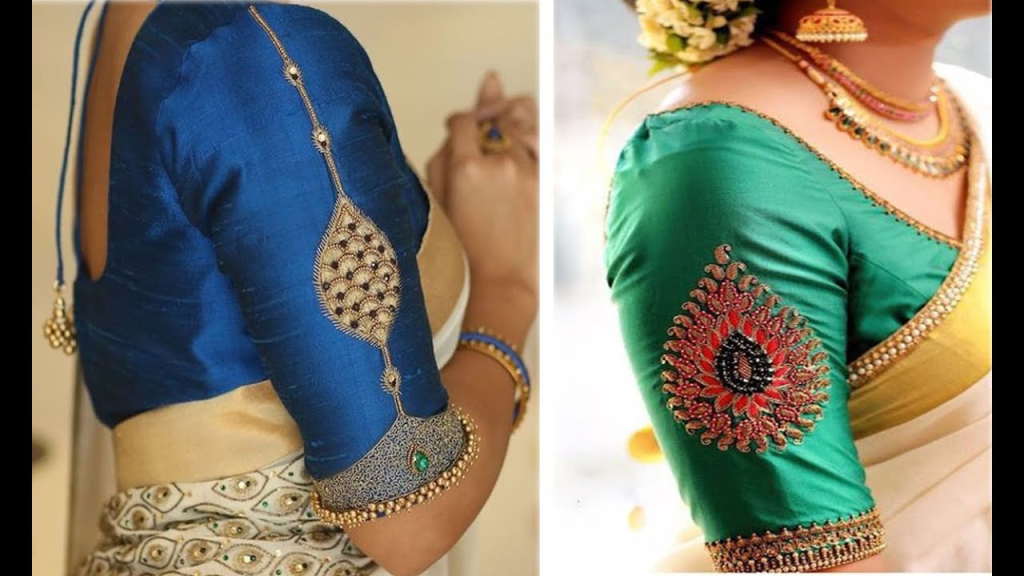
Kasuti embroidery is an exquisite type of embroidery from northern Karnataka. It has become one of the most popular arts of this region and is exclusively associated with the Aari work villages in this part of the country. The embroidery artisans from this region are protected by a Geographical Indicator from the Government of India, which ensures that any profit made from the sale of this embroidery comes back to them.
Kasuti embroidery is one of the oldest forms of Indian embroidery. Its origins can be traced as far back as the 7th century A.D. There are many different origin stories surrounding its origins. Some people believe it was brought to Karnataka from Gujarat while others believe it originated in the golden period of art and architecture during the rule of the Chalukya dynasty.
Though initially, it was only done in the region of Dharwad, over time, it spread to other parts of Karnataka and is today used across south India. This work was initially only done by women and till today, women remain an integral part of the Kasuti embroidery cottage industry.
Kasuti Embroidery
Kasuti embroidery patterns take a long time to make and often require more than one embroidery artist to ensure a proper maneuvering. The unique thing about this type of embroidery is that it requires counting of each thread on the cloth. This technique ensures that the finished designs have a very intricate and beautiful look. There are four types of stitches in Kasuti embroidery: the gavanti or double running stitch, the muragi or zig zag running stitch, the neygi or darning stitch and henthe or cross stitch.
The menthe is used to embroider the background designs. For those wondering how to do Kasuti embroidery, the answer lies not just in the types of stitches used, but also the style of execution. The embroidery artists ensure the stitches are created without any knots, which means you can use that both sides of the cloth.
A Kasuti embroidery design is also embroidered on a blank canvas rather than on a fabric with the designs pre-traced. The template of the design lies in the mind of the artist and this creates a very unique look for the embroidery. However, the recommended first step in any Kasuti embroidery tutorial will be to first draw out the patterns on a paper. This helps to maintain the symmetry of the finished designs as only the most skilled Kasuti embroidery artists can get the right design with no basic template.
 Site Title
Leave a comment